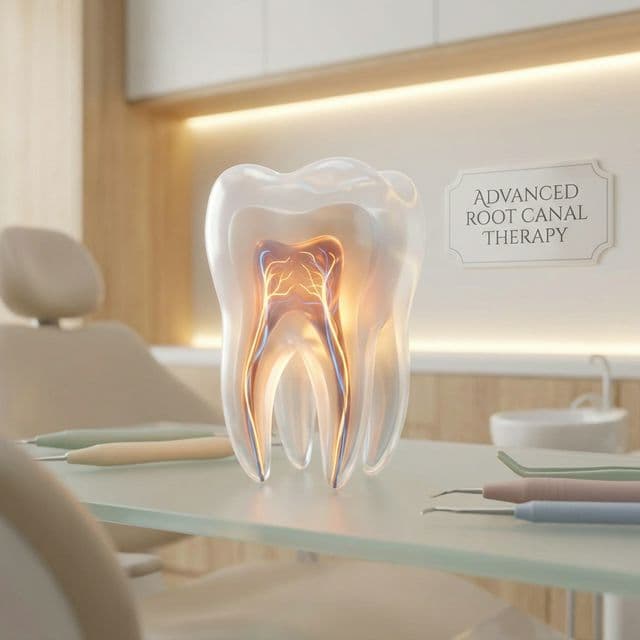
One of the most common questions I hear from patients at our St. John's clinic is: "How do I know if I need a root canal?" It's a great question, because early detection can be the difference between saving your natural tooth and losing it entirely. Here are the five signs I tell every patient to watch for.
1. Persistent Tooth Pain
If you're experiencing a toothache that doesn't go away — especially a deep, throbbing pain — it could mean the nerve inside your tooth (called the pulp) is inflamed or infected. This kind of pain often gets worse at night or when you lie down. Occasional sensitivity is normal, but pain that lingers for days is your tooth telling you something is wrong.
2. Prolonged Sensitivity to Hot or Cold
Most people feel a brief zing when they drink ice water or sip hot coffee. That's normal. What's not normal is when that sensitivity lingers for 30 seconds or more after you've removed the hot or cold stimulus. Prolonged sensitivity often indicates that the nerve inside the tooth is damaged and struggling to recover.
3. Swollen or Tender Gums
Swelling near a specific tooth — especially if the gum feels tender to the touch or you notice a small bump (sometimes called a "gum boil" or fistula) — can indicate an infection at the root of the tooth. This is your body's way of trying to drain the infection. If you see this, please don't ignore it.
4. Darkening of the Tooth
A tooth that has turned grey, dark yellow, or brownish compared to the teeth around it may have suffered internal damage. This discolouration happens when the blood supply to the tooth's nerve is compromised, causing the pulp tissue to break down. It doesn't always hurt, but it almost always indicates a problem inside the tooth that needs attention.
5. Pain When Chewing or Touching the Tooth
If biting down on food causes a sharp, shooting pain in a specific tooth, or if the tooth is tender when you press on it, the root and surrounding bone may be involved. This is especially true if the pain is localized to one tooth rather than a general area.
What Should You Do?
If you're experiencing any of these symptoms, I'd encourage you to book an appointment with us as soon as you can. A root canal in 2025 is nothing like the horror stories from decades past — modern techniques make it virtually painless, and the procedure saves your natural tooth. At our clinic on Stavanger Drive in St. John's, we use gentle anaesthesia and take our time to ensure you're completely comfortable.
The most important thing is not to wait. A small infection today can become a serious abscess tomorrow. Early treatment is faster, more comfortable, and gives your tooth the best chance of a full recovery.
Need Root Canal Therapy?
Dr. Muller and the team are here to help. Book an appointment at our St. John's office.